
Radiation Therapy in Hyderabad
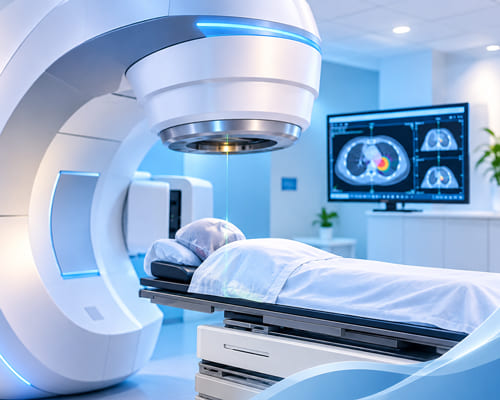
Radiation therapy (radiotherapy) uses high-energy radiation to damage cancer cell DNA and stop cells growing or dividing. It may be delivered externally or internally through brachytherapy. Depending on the cancer and treatment goal, it may be used alone or with surgery or systemic treatment.
How many sessions? It depends on the cancer, stage and technique. SBRT usually needs a few sessions; conventional courses can run for several weeks.
Am I radioactive afterwards? Not after external beam radiation. Some brachytherapy approaches have specific precautions.
How does radiation therapy work?
Radiation damages the DNA inside cancer cells so they cannot keep growing and dividing. Healthy cells can usually repair themselves better, and modern planning is designed to keep dose away from them.
What types of radiation therapy are used?
| Type | What it is | Often used for | Sessions |
|---|---|---|---|
| External beam radiotherapy 3D-CRT, IMRT, VMAT, IGRT | A machine directs beams from outside the body. Intensity-modulated and image-guided methods shape the dose closely around the tumour and check your position before each treatment. | Many cancers, including breast, head and neck, prostate and rectal cancers. | Often several weeks of short daily sessions. |
| Stereotactic body radiotherapy SBRT / SABR | Very precise, high-dose radiation delivered in a small number of sessions. | Selected tumours in the lung, liver, spine and prostate, and selected metastatic disease. | Usually a few sessions. |
| Stereotactic radiosurgery SRS | Highly focused radiation, usually in one or a few sessions, with no incision. | Brain and spine tumours, including brain metastases. | One to a few sessions. |
| Brachytherapy | A radiation source is placed inside or next to the tumour. | Cervical cancer and some prostate and other cancers. | Varies by site and technique. |
The appropriate radiation technique and number of sessions depend on the cancer type, stage, tumour location, individual clinical findings and treatment goals.
Which cancers can be treated with radiation therapy?
Radiation may be used for the following cancers, depending on clinical assessment:
- Breast cancer, often after surgery to lower the chance of the cancer returning
- Lung cancer, including SBRT for selected early-stage tumours
- Head and neck and oral cancers, alone or with chemotherapy
- Cervical cancer, using external beam radiation and brachytherapy
- Prostate cancer, using external beam radiation, SBRT or brachytherapy depending on the case
- Oesophageal and rectal cancers, often combined with chemotherapy or surgery
- Brain tumours and brain metastases, using radiosurgery or radiotherapy
- Metastatic cancer, to control disease or relieve symptoms such as pain
Whether a technique suits you is decided only after a clinical assessment of your reports.
What happens during radiation treatment?
Consultation: Dr. Jotwani reviews your reports and examines you, and explains the goal of treatment.
Planning scan: A CT scan, sometimes with MRI or PET images, maps the area. You may have a mask or body mould made to keep you still.
Treatment planning: Your team designs the plan and checks it before the first session.
Treatment sessions: Each visit is short, and you feel no pain during delivery. The beam is on for only a few minutes, though positioning and checks make the visit longer.
Follow-up: You are reviewed during and after treatment.
What are the side effects of radiation therapy?
Side effects depend on the area treated and the dose. Common ones include tiredness and skin redness or dryness in the treated area. Most improve after treatment ends, though some can last longer. Your team explains what to expect and how to manage it.
| Area treated | Effects some people notice (varies from person to person) |
|---|---|
| Head and neck | Sore mouth or throat, dry mouth, taste changes, skin redness. |
| Chest | Tiredness, cough, discomfort when swallowing. |
| Abdomen or pelvis | Nausea, loose stools, bladder irritation. |
| Brain | Headache, tiredness, hair thinning in the treated area. |
| Breast | Skin redness or dryness, tiredness, tenderness. |
Side effects vary depending on the treatment area, radiation dose, technique and individual response. Discuss any new or worsening symptoms with your treating team.
Contact your oncology team urgently for fever during chemotherapy, severe or worsening symptoms, or new symptoms during immunotherapy. Seek emergency care for severe breathing difficulty or other emergencies; do not wait for an online reply.
Is radiation therapy combined with other treatments?
Often, yes. Radiation may be given after surgery, together with chemotherapy (chemoradiation), or alongside immunotherapy. Order and timing matter, so Dr. Jotwani coordinates with your surgical and medical oncologists. Read more about [surgery and radiation], [chemotherapy and chemoradiation] and [immunotherapy and radiation].
How is a radiation plan made safely?
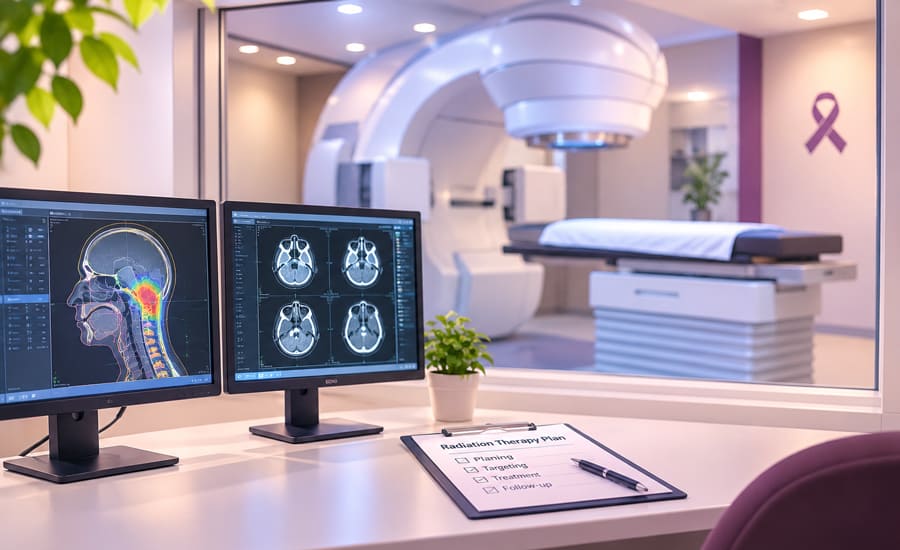
The same cancer can need very different radiation plans. Careful mapping, image guidance before treatment and quality checks of each plan help deliver the dose where it is needed and limit it elsewhere.
When is radiation therapy recommended?
Radiation may be used to cure selected cancers, reduce recurrence risk after surgery, control disease or relieve symptoms. The choice depends on stage, tumour location, prior treatment and overall health.
How should you prepare for radiation therapy?
Bring pathology reports, imaging and prior treatment summaries. Ask about positioning, medicines, nutrition and any site-specific preparation. Do not change medicines or supplements without advice.
Can radiation cause long-term effects?
Yes. Late effects can appear months or years later and depend on the treated organs, dose and other treatments. Discuss individual risks and follow-up before starting.
Discuss your treatment plan
Request a consultation with Dr. Amit K. Jotwani, radiation oncologist in Hyderabad, or submit relevant reports through the second-opinion form once secure upload is enabled. Confirm current consultation location and availability before visiting.
This information is general and does not replace individual medical advice.