

Cancer Surgery and the Role of Radiation Therapy
Cancer surgery removes a tumour and sometimes surrounding tissue or lymph nodes. Radiation may be recommended before surgery, after surgery or as an alternative in selected cases. A surgical specialist performs the operation; a radiation oncologist evaluates the role of radiotherapy.
Is radiation needed too? Sometimes. The pathology report from your operation helps decide.
Can radiation replace surgery? For selected cancers and patients, yes.
Second opinion? Useful before surgery to confirm the diagnosis and check other options.
Why is cancer surgery used?
- To remove the cancer when it is limited to one area and can be taken out safely
- To find out more through a biopsy or staging operation
- To reduce symptoms by relieving pressure, bleeding or blockage
- To rebuild shape or function after cancer removal, such as breast reconstruction
What are the types of cancer surgery?
Open surgery: a standard incision gives the surgeon direct access.
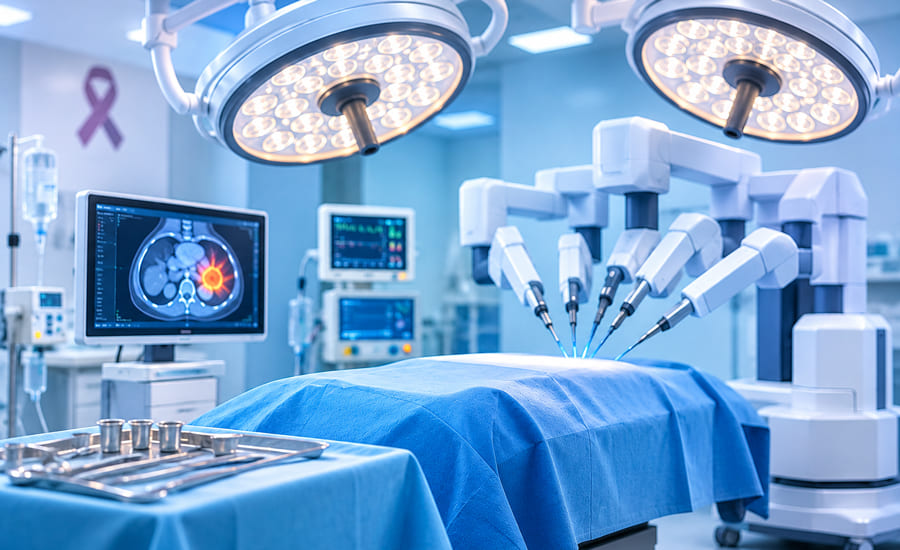
Minimally invasive surgery (laparoscopic or robotic): small incisions, often with a quicker recovery for suitable patients.
Organ-preserving surgery: removes the cancer while keeping as much healthy tissue as possible, for example breast-conserving surgery.
Palliative surgery: aimed at comfort rather than cure.
Is radiation given before or after surgery?
Radiation and surgery are often planned as a pair. The timing depends on the cancer type and what your team wants to achieve.
| Timing | Purpose | Example |
|---|---|---|
| Before surgery Neoadjuvant radiotherapy | Shrinks a tumour and can make it easier to remove. | Some rectal and oesophageal cancers. |
| After surgery Adjuvant radiotherapy | Treats remaining microscopic cells and lowers the chance of the cancer returning. | Breast cancer after breast-conserving surgery. |
| Instead of surgery Definitive radiotherapy | For some patients, such as when an operation is risky or the tumour is in a delicate location. | Selected early lung tumours treated with SBRT. |
The timing and suitability of radiation therapy depend on the cancer type, stage, tumour location, overall health and multidisciplinary treatment recommendations.
The pathology report from your operation guides what comes next.
What should I expect around cancer surgery?
Assessment: scans, blood tests and a check of your fitness for anaesthesia.
Operation: performed by a surgical oncologist or surgeon experienced in your cancer type.
Recovery: hospital stay, pain control, wound care and gradual return to activity.
Further treatment: if needed, radiation or medicines are planned after you recover.
What are the risks of cancer surgery?
All operations carry risks, such as bleeding, infection, reactions to anaesthesia and effects specific to the organ involved. Your surgical team explains these before you decide.
What should I ask before cancer surgery?
- What operation is planned, and why this one?
- Is the goal to cure, control or relieve symptoms?
- Will I need radiation or medicines before or after?
- What are the risks and the likely recovery time?
- What will the pathology report tell us?
- Are there other options, such as radiation alone?
Should I get a second opinion before surgery?
It can help. A review may clarify your diagnosis, explains what the scans and pathology show, and checks whether other treatments could be used with or instead of surgery. Dr. Jotwani can review your reports from the radiation oncology side, online or in person.
What are neoadjuvant and adjuvant treatments?
Neoadjuvant treatment is given before surgery; adjuvant treatment follows surgery to reduce recurrence risk when indicated. Radiation may also be the main treatment for selected cancers.
How does pathology guide radiation planning?
The pathology report may describe tumour size, grade, lymph node involvement and surgical margins. Positive margins mean cancer cells are found at the edge of removed tissue. These findings help guide further treatment but do not automatically mean radiation is required.
What records are useful before a second opinion?
Bring biopsy results, imaging, staging information, proposed surgery and any prior treatment records. After surgery, include the operative and final pathology reports.
Discuss your treatment plan
Request a consultation with Dr. Amit K. Jotwani, radiation oncologist in Hyderabad, or submit relevant reports through the second-opinion form once secure upload is enabled. Confirm current consultation location and availability before visiting.
This information is general and does not replace individual medical advice.