

Cancer Immunotherapy and Radiation Therapy
Cancer immunotherapy helps the immune system recognise or attack cancer. Suitability depends on cancer type, stage, previous treatments, health and sometimes biomarkers. A medical oncologist assesses systemic treatment; a radiation oncologist evaluates the role and timing of radiation.
Right for every cancer? No. It helps in some cancers and in selected patients, and testing guides the decision.
How is it given? Usually as an infusion every few weeks. The course may last months.
Used with radiation? Sometimes, together or in sequence. Timing is planned jointly.
How does immunotherapy work?
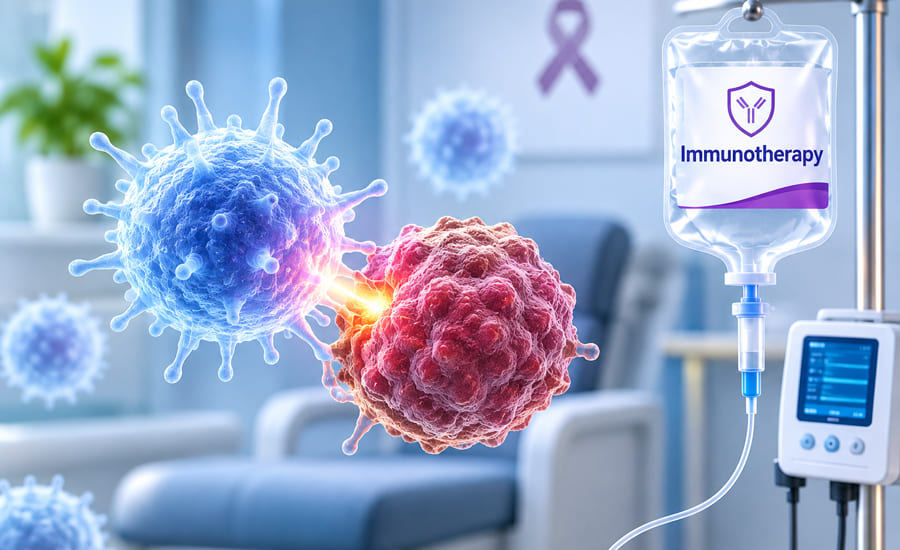
Cancer cells can hide from the immune system. Immunotherapy medicines remove those disguises or boost the immune response so that immune cells can find and attack the tumour.
What are the main types of immunotherapy?
| Type | How it works | Where it is used |
|---|---|---|
| Immune checkpoint inhibitors | Release the "brakes" on immune cells so they can attack cancer. | Several cancers, such as certain lung, skin, kidney and head and neck cancers. |
| Cell-based therapies Such as CAR-T | Immune cells are collected, modified and returned to attack cancer. | Selected blood cancers. |
| Cancer vaccines and other approaches | Train the immune system against specific features of a cancer. | Specific situations or clinical trials. |
The suitability of immunotherapy depends on the cancer type, stage, relevant biomarkers, previous treatments and individual clinical assessment.
Is targeted therapy the same as immunotherapy?
No. Targeted therapy uses medicines aimed at specific changes in cancer cells, and biomarker tests decide whether you are a candidate. Immunotherapy works through the immune system. They are different treatments, and some patients receive one, the other, or both.
Who may benefit from immunotherapy?
Suitability depends on the cancer type and stage, biomarker results (such as PD-L1 or MSI status), earlier treatments and your general health. Your medical oncologist explains whether tests are needed.
Can immunotherapy be combined with radiation?
Radiation and immunotherapy may be used together or in sequence in selected cases. Timing and overlapping risks require joint assessment.
What should I expect during immunotherapy?
Treatment is usually given as an infusion every few weeks, and the course may last months. You will have regular blood tests and scans to check progress.
What are the side effects of immunotherapy?
Because immunotherapy activates the immune system, it can sometimes cause inflammation in organs. Tiredness, rash and diarrhoea are among the commoner effects. Some reactions can be serious or life-threatening, including after treatment ends.
| Area | What you might notice |
|---|---|
| Skin | Rash or itching. |
| Bowel | Diarrhoea or stomach pain. |
| Lungs | New cough or breathlessness. |
| Liver | Tiredness, yellow eyes or skin, dark urine. |
| Hormone glands Such as the thyroid | Tiredness, weight change, feeling cold or unusually thirsty. |
Immunotherapy-related side effects can occur during or after treatment. Report new or worsening symptoms promptly to your oncology team. Seek emergency medical care for severe breathing difficulties.
Contact your oncology team urgently for fever during chemotherapy, severe or worsening symptoms, or new symptoms during immunotherapy. Seek emergency care for severe breathing difficulty or other emergencies; do not wait for an online reply.
How do immunotherapy and radiation differ?
Immunotherapy acts through the immune system, chemotherapy uses drugs to kill or inhibit cancer cells, targeted therapy acts on specific molecular features, and radiation uses energy to treat a defined area.
What do PD-L1 and MSI tests mean?
PD-L1 (programmed death-ligand 1) and MSI (microsatellite instability) are biomarkers that may help guide immunotherapy decisions in selected cancers. Results are interpreted alongside clinical findings.
What should a radiation oncologist review?
Relevant questions include the area needing radiation, previous radiation doses, systemic treatment schedule and potential overlapping toxicities. Combined treatment is not appropriate for everyone.
Discuss your treatment plan
Request a consultation with Dr. Amit K. Jotwani, radiation oncologist in Hyderabad, or submit relevant reports through the second-opinion form once secure upload is enabled. Confirm current consultation location and availability before visiting.
This information is general and does not replace individual medical advice.